
Business growth depends on attracting the right leads. All businesses rely on potential customers to drive sales and build relationships. With many lead generation methods, it can be overwhelming. Knowing the best strategies to capture, nurture, and convert leads is essential for expansion and increased revenue.
Lead generation is the process of identifying and attracting potential customers to your business.
Whether you're looking to generate sales leads or just overall leads for your business, the goal is the same: to find people or companies that are genuinely interested in what you offer and guide them through the sales journey.
With the right strategies, you can capture high-quality leads who are more likely to convert into paying customers and become brand advocates.
This article explores proven lead generation strategies like optimizing landing pages, leveraging content marketing, using paid ads, and implementing referral programs. It covers inbound and outbound methods to help convert leads into loyal customers.
How to Generate Sales Leads: 9 Key Strategies
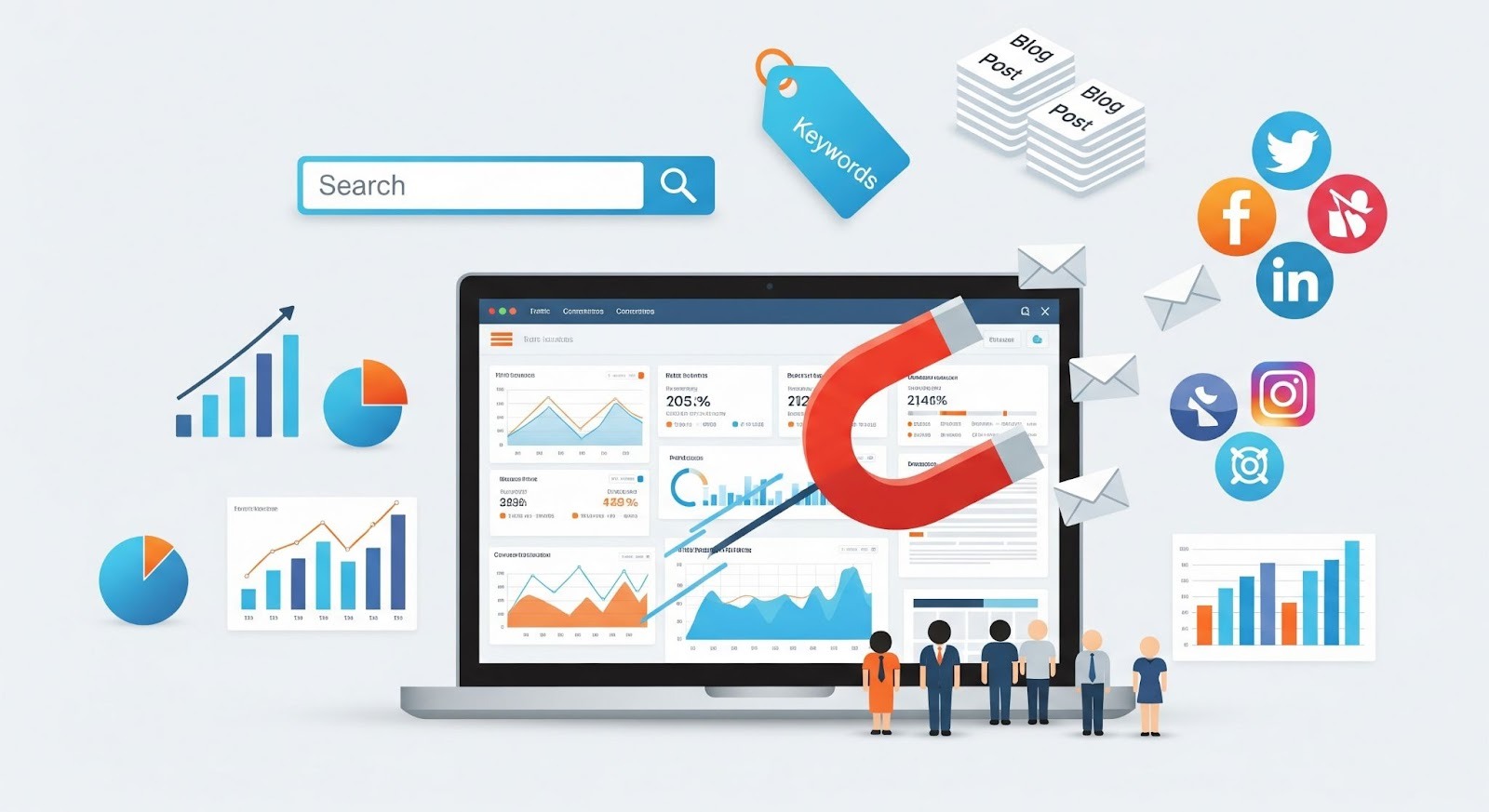
Generating sales leads is crucial for any business aiming to drive growth and increase revenue. It involves attracting potential customers who are interested in your product or service. Effective sales lead generation requires a mix of strategies, including SEO, content marketing, email campaigns, and paid advertising to capture qualified leads.
Build High-Converting Landing Pages
A landing page is often the first point of contact for a potential lead, making it essential to optimize this page for conversions. Here are some tips for improving your landing pages:
- Clear, concise CTAs (Call to Actions) such as "Get Started" or "Request a Demo."
- Minimal form fields to reduce friction and increase conversions
- Mobile-optimized design to ensure accessibility across all devices
Landing pages should be designed to guide visitors toward a specific action, whether it’s filling out a form, scheduling a demo, or downloading a resource.
Leverage Content Marketing for Lead Generation
Content marketing plays a pivotal role in attracting and engaging your target audience by offering content that’s informative, valuable, and problem-solving. By doing so, you can build trust and establish yourself as an authority in your field. Effective content marketing doesn’t just drive awareness but also nurtures leads, guiding them through the buyer’s journey and eventually converting them into loyal customers.
The Role of Gated Content in Lead Generation
Gated content refers to valuable resources that are only accessible after a user provides some form of contact information, such as an email address or phone number. This type of content is highly effective in generating leads, as it offers more in-depth information or solutions that users are willing to exchange their details for.
Here are some common forms of gated content:
- eBooks: In-depth guides that provide comprehensive information on a specific topic. eBooks allow you to showcase your expertise and offer valuable insights to users who are seeking knowledge.
- Whitepapers: These are often industry-specific reports or research findings that position you as an authority. Whitepapers can attract highly qualified leads, especially in B2B markets.
- Case Studies: Detailed accounts of how your product or service has helped solve problems for other customers. Case studies build trust and show real-world success stories.
By offering gated content, you are essentially creating a two-way value exchange where you get contact information in return for providing valuable insights.
Utilizing a Variety of Content Formats
Not all content formats appeal to every potential lead, which is why it’s important to use a variety of content types. By diversifying your content, you increase the chances of attracting different segments of your audience at various points in the buyer’s journey.
- Blogs: Blogs remain a fundamental content format in any content marketing strategy. They help attract traffic, answer common questions, and improve SEO. By consistently posting high-quality blogs, you position your brand as a thought leader in your industry.
- Videos: Video content is highly engaging and tends to have better retention rates than written content. It’s particularly effective in capturing attention and simplifying complex ideas. Explainer videos, product demos, and customer testimonials are great ways to leverage video.
- Infographics: These visual representations of information simplify complex topics and make them easier to digest. Infographics are highly shareable, which can increase your reach and engagement.
- Webinars: Webinars are live events where you can engage directly with your audience, answer questions in real time, and showcase your expertise. Offering webinars on industry-specific topics is a great way to generate leads and build authority.
Aligning Content with the Buyer’s Journey
Your content marketing efforts should align with the different stages of the buyer's journey: awareness, consideration, and decision. This approach ensures that you’re providing the right content at the right time.
- Top-of-Funnel (TOFU) Content: At this stage, your goal is to raise awareness and attract visitors who are just beginning to recognize a problem they need to solve. TOFU content should be educational and broad, focusing on capturing attention. Examples include blog posts, social media content, or introductory videos.
- Middle-of-Funnel (MOFU) Content: At this stage, your audience is looking for solutions to their problem. They know what they need but may not yet be sure about which product or service to choose. MOFU content should address their concerns, demonstrate how your offering solves their problem, and provide deeper insights. Examples include case studies, eBooks, and detailed blog posts.
- Bottom-of-Funnel (BOFU) Content: This is where your audience is ready to make a decision. BOFU content should focus on showing why your solution is the best choice. It includes product demos, customer testimonials, free trials, and clear calls to action to push the lead to convert into a customer.
By aligning your content with the buyer’s journey, you increase the likelihood of engaging prospects at each stage, nurturing them until they are ready to convert.
Implementing SEO Best Practices for Lead Generation
Search engine optimization (SEO) is a long-term strategy that plays a crucial role in attracting qualified traffic to your website. By optimizing your content for search engines, you can increase your website’s visibility in organic search results, driving more traffic from users actively looking for solutions like yours.
Target Long-Tail Keywords
Long-tail keywords are specific search phrases that usually contain three or more words. These keywords tend to have lower search volume but higher intent, as users searching for them are often further along in the buying process. By targeting long-tail keywords, you can attract highly relevant traffic that is more likely to convert.
For example, instead of targeting a broad keyword like “content marketing,” you might target something more specific, like “how to use content marketing for lead generation.” This type of keyword speaks directly to a user’s intent and aligns with your lead generation goals.
Optimize Your Content for Search Engines
On-page SEO optimization is crucial for improving your content’s visibility in search engine results. Here’s how you can optimize your content:
- Meta Tags: Ensure that each page or blog post has a relevant and compelling title tag and meta description. These elements appear in search results and influence whether users click through to your content.
- Headers and Subheaders: Use clear and structured headers (H1, H2, H3) that organize your content and include relevant keywords. This helps search engines understand the structure of your content and improves its chances of ranking for related queries.
- Image Optimization: Include alt text for all images on your site to improve SEO and make your content more accessible. Use high-quality images that support your written content and improve user engagement.
Build Quality Backlinks
Backlinks are one of the most important ranking factors in SEO. When other authoritative websites link to your content, search engines view it as a vote of confidence, signaling that your content is trustworthy and valuable. To build quality backlinks:
- Guest Blogging: Contribute to reputable blogs in your industry and include links back to your own content.
- Create Shareable Content: Infographics, in-depth guides, and research studies are often shared by other websites, which can naturally generate backlinks.
- Outreach Campaigns: Reach out to industry influencers, journalists, or bloggers and ask them to link to your content if it’s relevant to their audience.
By building quality backlinks, you not only improve your SEO but also increase the visibility and authority of your content, driving more qualified leads to your site.
SEO Drives Organic Traffic, Leading to Qualified Leads
SEO is an essential tactic for attracting qualified leads over time. When you implement SEO best practices, you increase the chances of ranking higher in search engine results, which leads to more organic traffic. As users visit your site, they are more likely to engage with your content, provide contact information for gated resources, and eventually convert into customers.
Run Paid Advertising Campaigns
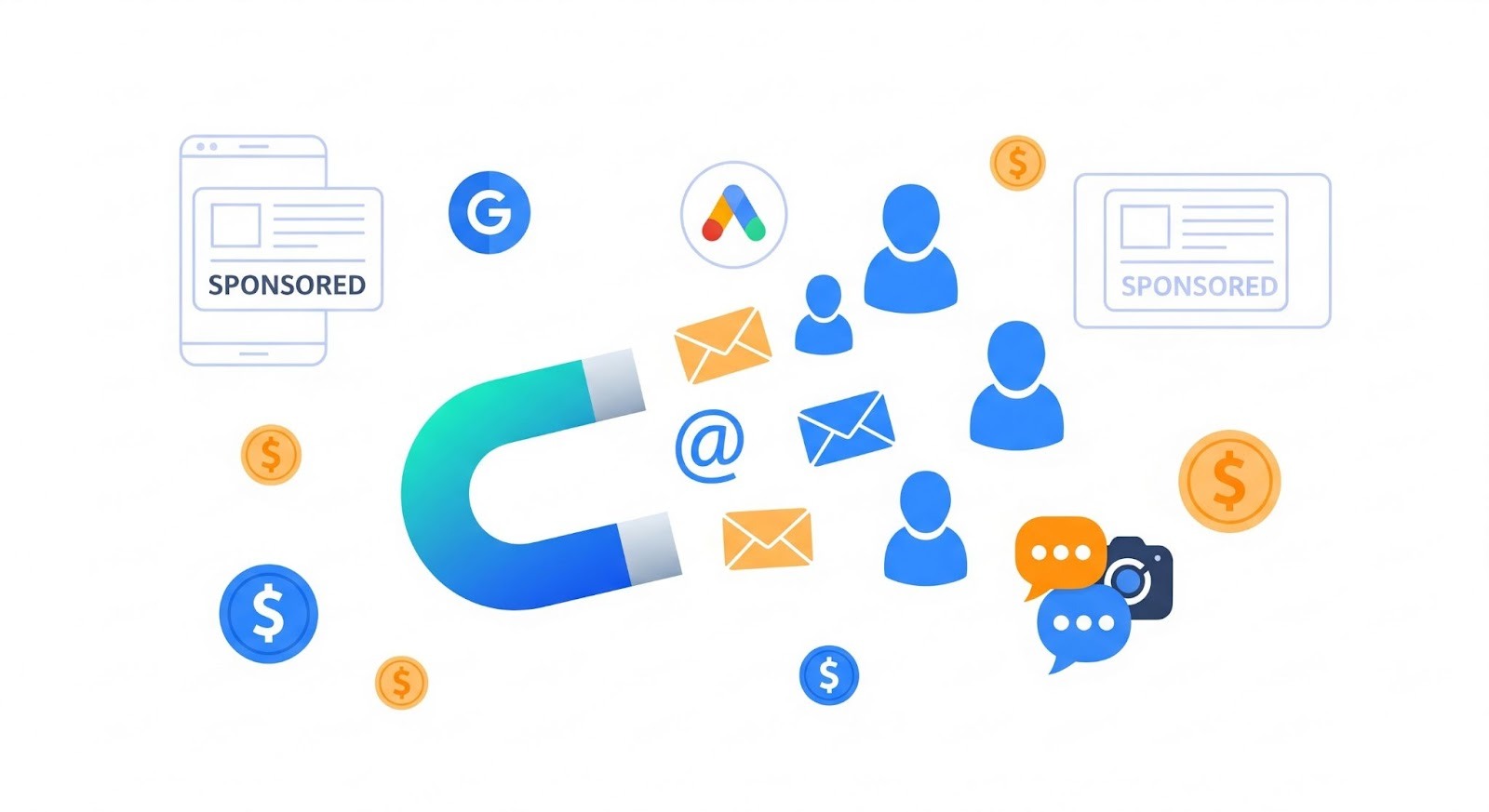
Paid ads can give you immediate access to prospects who are actively searching for products or services like yours. Here's how to use paid ads for lead generation:
- Use Google Ads to target high-conversion keywords and drive immediate traffic to your landing pages
- Run social media ads on platforms like LinkedIn, Facebook, or Instagram to reach highly targeted audiences
- Retarget visitors who have interacted with your website but haven’t converted yet, encouraging them to return and take action
Paid advertising is a powerful tool for reaching prospects at the right moment, but it’s essential to continuously monitor and adjust your campaigns for optimal results.
Nurture Leads with Email Marketing
Once you have captured leads, nurturing them through email marketing is critical. By sending targeted, relevant emails, you can guide leads down the sales funnel. Here are ways to use email effectively for lead generation:
- Segment your email list based on actions and behaviors such as content downloads or website visits
- Personalize your email content to increase relevance and engagement
- Automate email workflows to send timely follow-up emails based on lead behavior
Email marketing helps keep your business in the minds of leads while providing them with useful information that helps them move toward a purchasing decision.
Use Social Media for Lead Capture
Social media platforms are an excellent way to reach and engage your audience. By sharing valuable content, promotions, and CTAs, you can generate leads directly on these platforms. Here are a few strategies:
- Run lead generation ads on platforms like LinkedIn and Facebook that allow users to submit their contact information directly through the platform
- Use organic posts to promote offers, blog posts, and other resources that attract interest
- Engage with followers through direct messages, comments, and live sessions
Social media lets you connect with prospects where they are already active, making it easier to capture leads and nurture them over time.
Host Webinars & Virtual Events
Webinars and virtual events are effective for demonstrating your expertise and building trust with your audience. These events allow you to engage directly with prospects and collect their contact information for follow-up. Here’s how to maximize lead generation through webinars:
- Promote your webinars through email, social media, and your website
- Offer exclusive content and expert insights to attract a larger audience
- Follow up with tailored content after the webinar to continue nurturing leads
Webinars not only generate leads but also provide an opportunity to showcase the value of your product or service in real-time.
How to Generate Leads: Broad Strategies
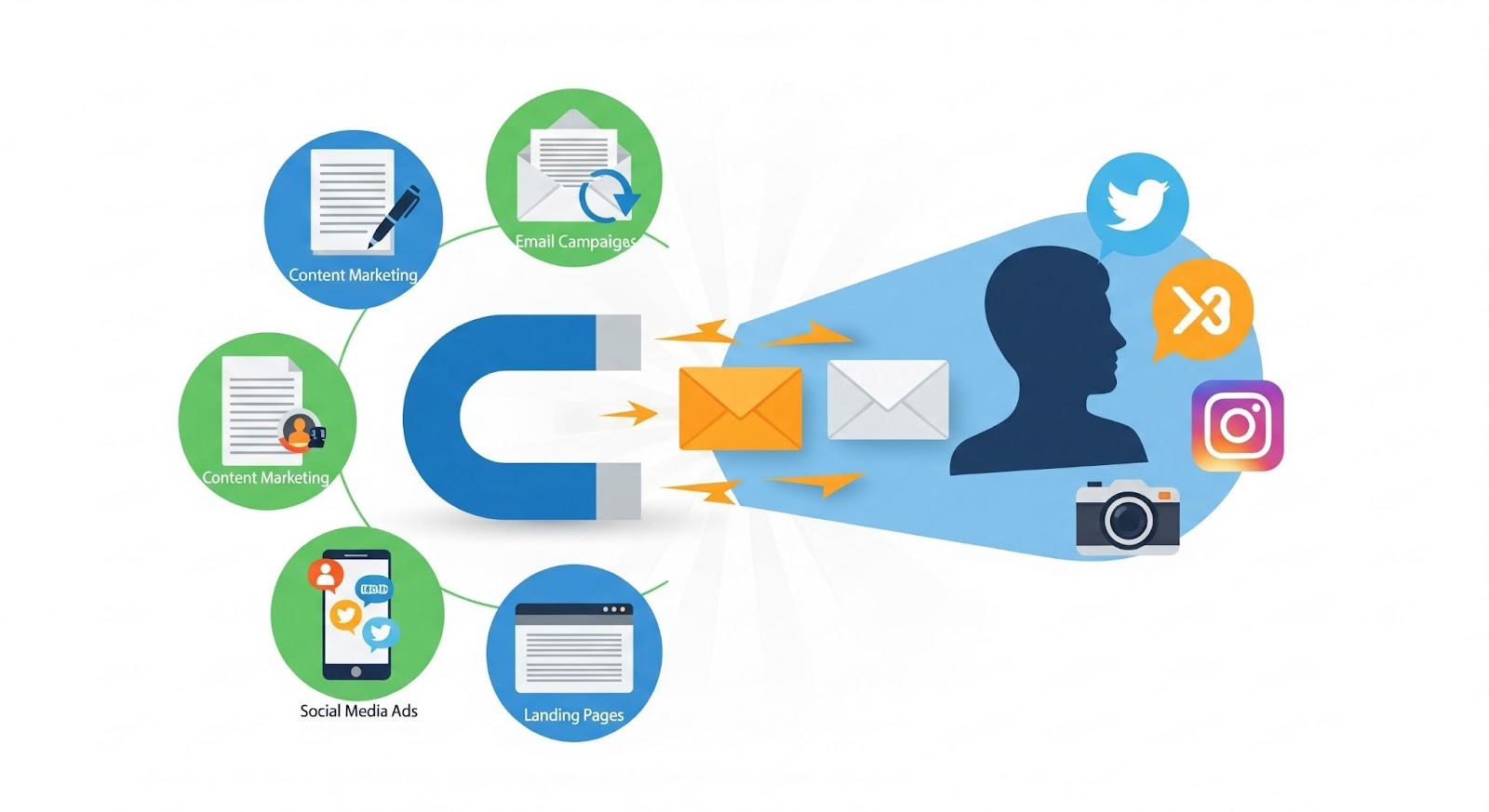
Referral programs are a great way to leverage your existing customers to generate new leads. By offering incentives for referrals, you encourage customers to spread the word about your business. Here’s how to make the most of referral programs:
- Provide incentives such as discounts or rewards for every successful referral
- Make the process simple, allowing customers to easily refer others via email or social media
- Promote your referral program through email newsletters and social media channels
Referrals are often high-quality leads because they come with built-in trust from people your prospects already know.
Utilize Cold Outreach
Cold outreach can still be an effective way to generate leads, particularly when done with a personalized touch. Cold calling, emails, or LinkedIn messages can help you reach potential leads who may not have heard about your business yet.
- Research your prospects to ensure your outreach is relevant and tailored
- Craft personalized messages that address their specific pain points or needs
- Follow up consistently to increase the likelihood of a response
While cold outreach can be time-consuming, it can also be highly effective when executed properly.
Optimize Your Conversion Process
Generating leads is just one part of the equation – you need to ensure that you convert those leads into paying customers. Here’s how to optimize your conversion process:
- Use clear CTAs throughout your website, landing pages, and emails
- A/B test forms, CTAs, and landing page elements to improve conversion rates
- Ensure smooth handoff from marketing to sales, so no leads fall through the cracks
A well-optimized conversion process ensures that you maximize the potential of every lead generated.